
A full body stretching routine for beginners helps improve flexibility, reduce stiffness, and support safe movement at home.
Starting a fitness journey as a beginner isn’t only about workouts and exercises — especially if you’re just starting with a 10-minute home workout for beginners.
Stretching plays an equally important role in keeping your body flexible, reducing stiffness, and helping you move comfortably in daily life.
Many beginners skip stretching because they believe it’s optional or only for advanced athletes. In reality, a simple full body stretching routine for beginners can improve mobility, support recovery, and make workouts feel easier and safer.
This guide explains a beginner-friendly stretching routine you can do at home without equipment, along with tips on when and how often to stretch.
New to fitness? Start with our Beginner Fitness Guide (Start Here) for the simplest path.
Why a Full Body Stretching Routine Is Important for Beginners
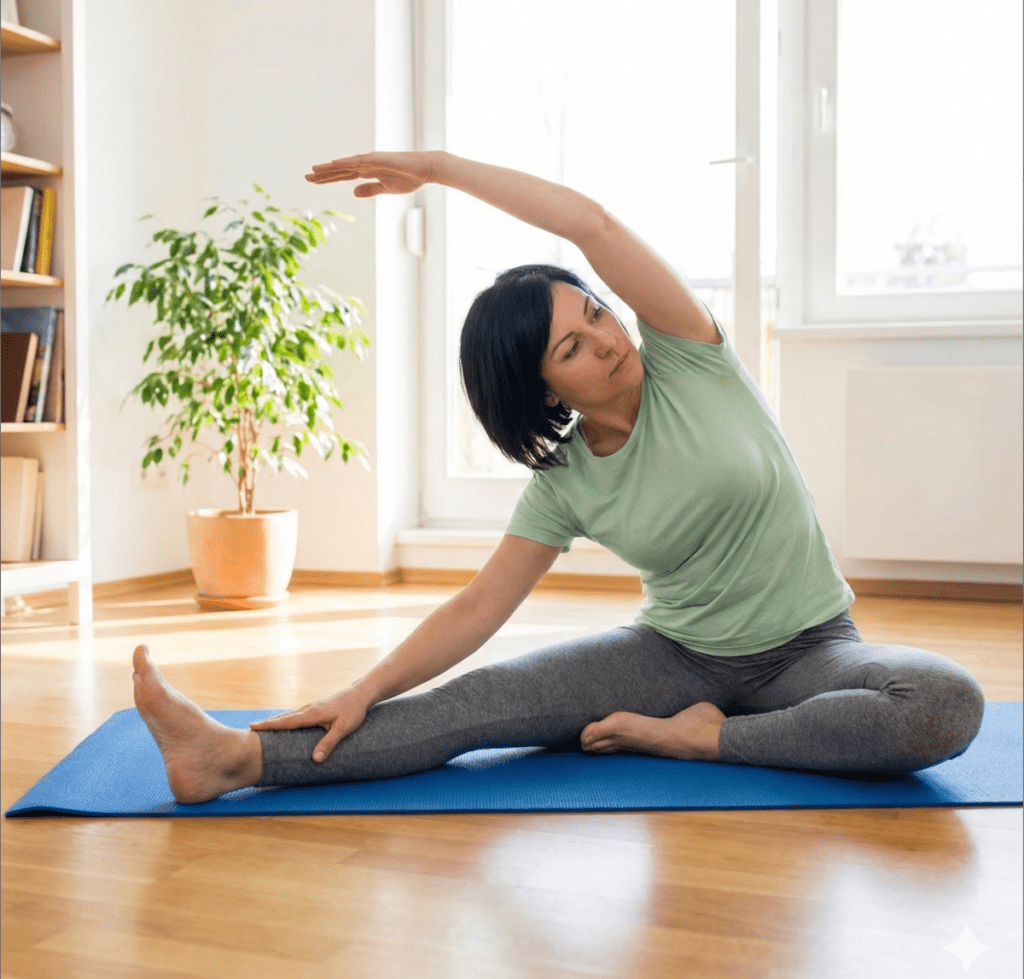
When you start exercising—or even if you spend long hours sitting—your muscles can feel tight and uncomfortable. Stretching helps by:
- Improving flexibility and range of motion
- Reducing muscle stiffness
- Supporting better posture
- Helping the body recover after workouts
- Making daily movements feel easier
For beginners, stretching is not about pushing limits. It’s about gentle, controlled movements that help your body relax and adapt.
According to Healthline, regular stretching can improve flexibility, reduce muscle stiffness, and support joint health over time.
When Should Beginners Stretch?
Beginners can stretch at different times depending on their routine:
- After workouts: Helps muscles relax and recover
- On rest days: Keeps the body mobile without intense effort
- In the morning or evening: Reduces stiffness from inactivity
Stretching should never feel painful. Mild tension is normal, but sharp discomfort is a sign to stop.
Full Body Stretching Routine for Beginners
This routine covers the entire body and takes about 10–15 minutes. Move slowly and breathe deeply throughout.
If you’re also planning your weekly routine, this stretching plan fits well with how often beginners should work out at home.
Neck and Upper Body Stretches
Neck Side Stretch
- Sit or stand comfortably
- Gently tilt your head to one side
- Hold for 15–20 seconds per side
Helps reduce neck tension and stiffness.
Shoulder Rolls
- Roll shoulders forward and backward slowly
- Perform for 30 seconds
Relieves tension from shoulders and upper back.
Arm and Chest Stretch
- Extend arms behind you
- Gently open the chest
- Hold for 20 seconds
Improves posture and upper-body flexibility.
Upper Back and Spine Stretches
Standing Forward Fold
- Stand with feet hip-width apart
- Bend forward slowly
- Let arms hang naturally
- Hold for 20–30 seconds
Helps stretch the back and hamstrings.
Seated Spinal Twist
- Sit on the floor or chair
- Twist gently to one side
- Hold for 15 seconds per side
Improves spinal mobility.
Lower Body Stretches
Quadriceps Stretch
- Stand and hold one foot behind you
- Keep knees close together
- Hold for 20 seconds per side
Stretches the front of the thighs.
Hamstring Stretch
- Sit or stand and extend one leg
- Lean forward gently
- Hold for 20 seconds per leg
Improves flexibility in the back of the legs.
Calf Stretch
- Step one foot back
- Press heel toward the floor
- Hold for 20 seconds per side
Supports ankle mobility and balance.
Hip and Glute Stretches
Hip Flexor Stretch
- Step one foot forward into a gentle lunge
- Keep torso upright
- Hold for 20 seconds per side
Helpful for people who sit a lot.
Seated Figure-Four Stretch
- Sit and cross one ankle over the opposite knee
- Lean forward slightly
- Hold for 20 seconds per side
Releases hip and glute tension.
How Often Should Beginners Stretch?
Beginners can stretch:
- Daily, if movements are gentle
- Or 3–5 times per week, especially after workouts
Stretching works best when it’s consistent and relaxed, not rushed.
Common Stretching Mistakes Beginners Should Avoid
- Bouncing during stretches
- Holding breath
- Stretching cold muscles aggressively
- Trying to force flexibility
Stretching should feel calming, not painful.
How Stretching Supports Home Workouts
Stretching helps beginners:
- Recover faster
- Reduce soreness
- Improve movement quality
If you’re following a 10-minute home workout for beginners, adding a short stretching routine makes the overall fitness plan more balanced and sustainable.
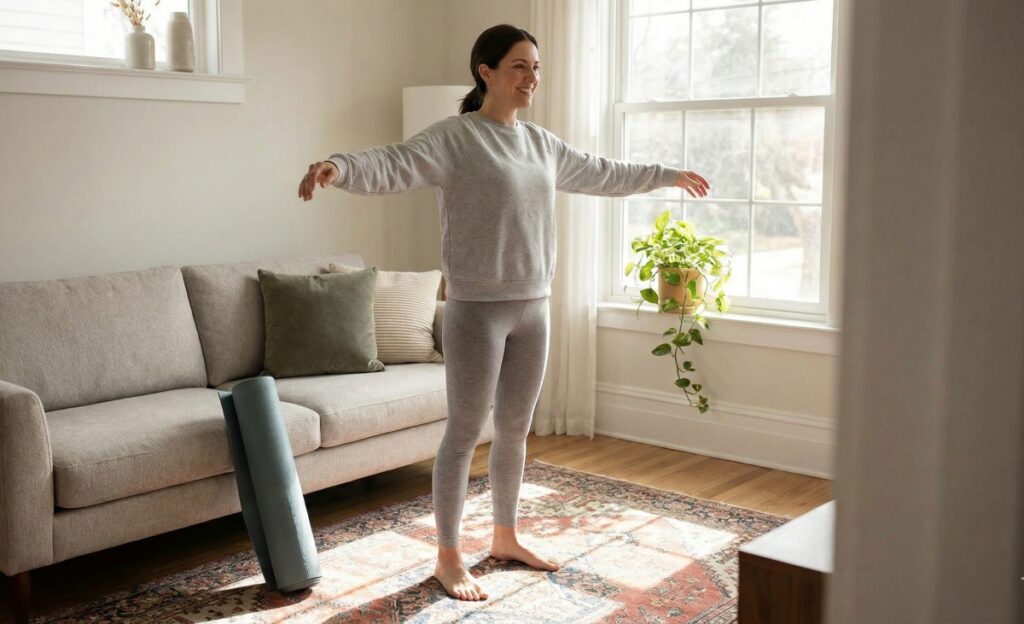
Final Thoughts
A full body stretching routine for beginners is one of the easiest ways to support long-term fitness. It doesn’t require equipment, special skills, or intense effort—just patience and consistency.
Stretch gently, breathe deeply, and allow your body to relax. Over time, stretching will help you move better, feel more comfortable, and enjoy your fitness journey more.
This full body stretching routine for beginners is designed to be safe, simple, and sustainable for everyday life.
❓ Frequently Asked Questions
Q: How often should beginners stretch?
A: Beginners can stretch daily or at least 3–5 times per week, especially after workouts.
Q: Should beginners stretch before or after workouts?
A: Dynamic stretching before workouts and static stretching after workouts is ideal.
About the Author
HealthNestify creates beginner-friendly fitness and wellness content focused on safe, sustainable habits. Our goal is to help beginners build healthy routines without confusion, extremes, or unrealistic expectations.